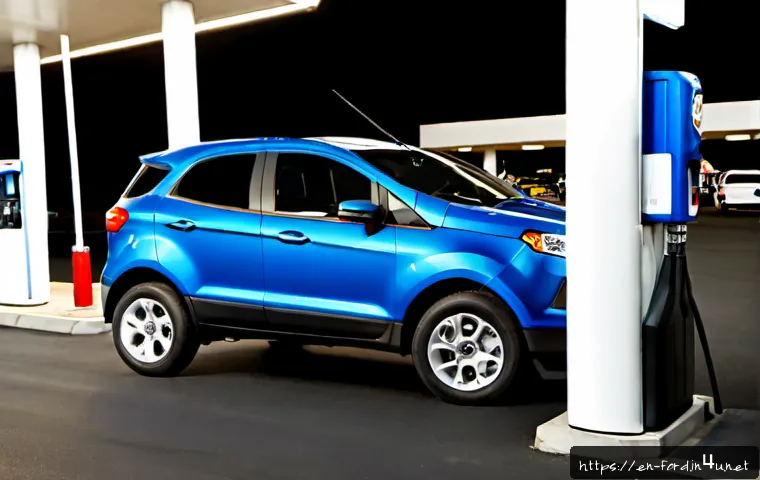
Ford EcoSport fuel economy can vary noticeably because U.S. models differed by year, engine, and drivetrain, while traffic and vehicle condition also change real-world mpg.

The fairest answer comes from calculating mpg over several full tanks and separating city, highway, and mixed-route driving. Many U.S.-market EcoSport models used a 2.0-liter four-cylinder engine with a six-speed automatic transmission and all-wheel drive, while some earlier versions offered a 1.0-liter EcoBoost engine with front-wheel drive.
That difference matters when comparing a used SUV listing or estimating your gasoline budget. A lower purchase price may still make sense, but only after factoring in expected mileage, local fuel prices, insurance quotes, and maintenance history.
One unusually poor tank is a reason to investigate, not a final verdict on the vehicle.
At a Glance
- EcoSport mpg depends on the exact configuration: model year, engine, drivetrain, condition, and route all matter.
- A full-tank calculation is more useful than a dashboard estimate alone, especially when repeated across several tanks.
- Compare total ownership costs, not fuel use alone: used-car price, insurance, service records, and annual mileage all affect the decision.
| Decision Factor | What to Compare | Why It Matters |
|---|---|---|
| City driving | Short trips, stop-start traffic, idling, hills, and air-conditioning use | These conditions can make fuel consumption higher than a steady-route result suggests. |
| Highway driving | Speed consistency, terrain, wind, passenger load, and cargo | A longer, steadier route can show how the vehicle performs outside urban traffic. |
| Mixed driving | Your usual blend of local roads and highway miles | This is often the most practical basis for a personal fuel-cost estimate. |
| Annual fuel budget | Yearly mileage, measured mpg, and local gasoline price | It shows whether a used EcoSport’s purchase price offsets its expected running costs. |
What a Real-World Fuel Economy Test Can Tell You
The short answer: mpg depends on drivetrain, route, and vehicle condition
A Ford EcoSport fuel economy test should begin with the exact vehicle, not the badge on the tailgate. The EcoSport was sold in the United States from the 2018 through 2022 model years, and ratings varied by model year, engine, and drivetrain. Many U.S. examples have a 2.0-liter four-cylinder engine, six-speed automatic transmission, and all-wheel drive. Some earlier U.S. configurations used a 1.0-liter EcoBoost engine with front-wheel drive.
That means two used EcoSport listings can look similar while having different fuel-use expectations. A route filled with traffic lights, steep grades, cold starts, or heavy cargo can also produce a different result from a mostly steady highway drive. Before comparing vehicles, confirm the engine and drivetrain in the listing, vehicle history information, and the vehicle’s current condition.
Why one tank of fuel is useful—but not conclusive
One tank can reveal a useful starting point. It may show whether a vehicle’s consumption appears reasonable for its route and use. But a single tank can be influenced by weather, traffic, tire pressure, a long period of idling, or an unusual trip.
Use several tanks before making a major used-car decision or assuming there is a problem. Record city, highway, and mixed-driving tanks separately when possible. This creates a clearer pattern than relying on one commute or one weekend trip.
The difference between dashboard readings and calculated mpg
A dashboard fuel-economy display can be convenient, but it is best treated as a reference. For a repeatable result, calculate mpg from miles driven divided by gallons added at the next fill-up. Record the odometer reading before and after the test period, then keep the fuel receipt or note the gallons added.
If the display and calculation differ, do not assume either one is automatically wrong. Compare them over multiple tanks using the same basic fill method. Consistency matters more than a single reading.
Compare City, Highway, and Mixed-Route Results Before Judging Efficiency
A simple fuel-economy comparison table for common driving patterns
Keep results in separate notes or a simple spreadsheet. Label each entry as city, highway, or mixed, then include the conditions that could explain the outcome. This is particularly helpful for owners whose daily driving changes by season or for shoppers test-driving more than one compact SUV.
A city result should reflect local traffic and normal errands. A highway result should reflect a realistic longer route rather than an unusually short, empty-road drive. A mixed result is often the best starting point for a household fuel budget because it resembles normal use more closely.
How all-wheel drive, hills, stop-start traffic, and air conditioning affect consumption
All-wheel drive, frequent elevation changes, and repeated acceleration from stops can affect fuel consumption. So can air-conditioning use, extra passengers, and cargo. These are not necessarily signs of a fault; they are reasons to avoid comparing unlike trips as if they were identical.
For a fair comparison, test vehicles on similar roads, at similar times of day where practical, and with broadly similar loads. If an all-wheel-drive EcoSport is being compared with a front-wheel-drive small crossover, note that the drivetrain difference is part of the ownership-cost comparison.
Estimating annual gasoline costs from your measured mpg and local prices
Once you have a representative mpg figure, estimate fuel use by dividing your expected annual miles by measured mpg. Then multiply the estimated gallons by your local gasoline price. This does not predict every expense, but it gives a useful planning figure for a used SUV budget.
Compare that estimate with the asking price, likely insurance quote, service history, and expected maintenance needs. A vehicle with a lower upfront price may remain appealing for limited annual mileage, while a driver covering many miles may place more value on a more efficient small crossover or hybrid.
How to Run a Fair Full-Tank Test
Record mileage, gallons added, route type, weather, and passenger or cargo load
Start with a full tank, reset the trip meter if available, and note the odometer reading. During the test period, write down the main route type, outdoor conditions, and whether the vehicle carried passengers or cargo. At the next fill-up, record the gallons added and miles driven.
This small amount of detail makes a low or high result easier to interpret. For example, a short-trip city tank in cold conditions should not be treated as equivalent to a long highway tank in mild weather.
Use the same fill method and test over multiple tanks
Use a consistent fill approach from tank to tank. Then calculate mpg using miles driven divided by gallons added. The goal is not laboratory precision; it is a repeatable personal comparison that reflects how the EcoSport is actually driven.
Testing over multiple tanks reduces the influence of one unusual route or weather change. It also helps a buyer decide whether a seller’s vehicle deserves a closer inspection before purchase.
Check tire pressure, maintenance alerts, and driving mode before testing
Before testing, check the tire-pressure information for the vehicle and look for warning lights or maintenance alerts. Tire condition, alignment concerns, brake drag, and overdue maintenance can affect how a vehicle drives and may affect fuel use. If the vehicle has selectable drive settings, verify which setting is being used and follow the owner documentation.

Do not use a fuel-economy test as a substitute for a pre-purchase inspection. A qualified vehicle inspection can be worthwhile when fuel use seems unusually high, warning lights are present, or maintenance records are incomplete.
Common Reasons an EcoSport May Use More Fuel Than Expected
Short trips, cold starts, idling, and aggressive acceleration
Short trips can combine cold starts, low average speeds, and repeated stops. Extended idling and rapid acceleration can also raise consumption. Before judging the vehicle, consider whether the test route reflects ordinary driving or an unusually demanding week.
Tires, wheel alignment, brakes, and overdue maintenance
Tires deserve a closer look on any used compact SUV. Confirm the tire specification, visible condition, and pressure information. Uneven wear may justify asking further questions about alignment or previous maintenance. Braking concerns, warning lights, or a missing service history are also reasons to slow down before committing.
When a low mpg result may justify a professional vehicle inspection
A repeated result that seems inconsistent with the vehicle’s configuration and normal driving conditions may justify a professional inspection. This is especially sensible if the EcoSport also has warning lights, drivability concerns, unusual noises, or unclear maintenance records. An inspection cannot guarantee future costs, but it can provide more information before a purchase decision.
Which Drivers May Find the EcoSport’s Fuel Use Acceptable?
Urban drivers prioritizing a compact footprint and higher seating position
An EcoSport may suit drivers who value a compact SUV shape, easier urban maneuvering, and a higher seating position. For these buyers, the right question is not simply “Is it the most efficient option?” but whether its fuel use fits their normal route and budget.
Buyers who drive limited annual mileage and value a lower used purchase price
Drivers with limited annual mileage may place greater weight on the used-car purchase price and documented condition than on small differences in gasoline spending. Compare the individual vehicle’s asking price with its maintenance records, tire condition, vehicle history report, and insurance estimate.
Drivers who may save more with a more efficient small crossover or hybrid
Drivers with frequent long commutes or high annual mileage may want to compare the EcoSport with more efficient small crossovers or a hybrid. Use the same annual fuel-cost method for each option. This keeps the comparison focused on actual use rather than a single advertised figure.
Selection Criteria and Comparison Summary
Before choosing a used Ford EcoSport, check these points:
- Exact configuration: confirm the model year, engine, and front-wheel-drive or all-wheel-drive setup.
- Test conditions: compare city, highway, and mixed-route results over more than one tank.
- Vehicle condition: review service history, tire condition, warning lights, and any inspection findings.
- Total budget: balance asking price, estimated gasoline spending, insurance quotes, and likely maintenance needs.
- Alternatives: compare similarly priced compact SUVs using the same ownership-cost assumptions.
Before committing, compare used-car listings with the same drivetrain and condition level, request a vehicle history report where available, and review insurance estimates for the exact vehicle. For final details, check the listing, service documentation, and insurance terms on the relevant provider pages.
In Closing
A Ford EcoSport fuel economy test is most useful when it reflects normal driving rather than one unusually good or poor trip. Calculate mpg from full-tank data, keep city and highway use separate, and repeat the process across several tanks. For a used purchase, fuel economy should be one part of a broader review that includes condition, records, price, and insurance. A careful comparison can help you decide whether a particular EcoSport fits your budget.
Useful Things to Know
1. U.S.-market Ford EcoSport vehicles were sold for the 2018 through 2022 model years.
2. EPA-style testing is standardized, but real-world mpg can change with traffic, weather, terrain, tires, cargo, and driving behavior.
3. Local gasoline prices and annual mileage determine how much any mpg difference affects your personal fuel budget.
Important Notes
Exact EcoSport fuel economy depends on the individual vehicle’s year, engine, drivetrain, mileage, maintenance condition, and tire specification. This guide does not provide a guaranteed mpg result, repair diagnosis, insurance premium, resale value, or fuel-cost prediction. Verify the exact configuration and condition of any vehicle you are considering.
Frequently Asked Questions
Q1. What mpg should I expect from a Ford EcoSport in everyday driving?
A1. Everyday mpg depends on the model year, engine, drivetrain, vehicle condition, route, weather, cargo, and driving style. The most useful estimate comes from calculated full-tank results collected over several normal city, highway, and mixed-driving tanks.
Q2. Is the Ford EcoSport a good used SUV choice if fuel costs are a priority?
A2. It can be worth considering, but compare the exact EcoSport configuration with alternative compact SUVs. Review the asking price, expected annual mileage, local gasoline cost, insurance estimate, service records, and measured fuel use rather than deciding from the vehicle name alone.
Q3. How many tanks of fuel should I test before deciding whether an EcoSport has a mileage problem?
A3. Test over multiple tanks, using a consistent fill method and recording the driving conditions. One tank can be affected by unusual traffic, weather, idling, or short trips. If low results continue and there are warning lights or drivability concerns, consider a professional vehicle inspection.